How builds work in Crimson Moon
Four systems, no classes, and a build that is only half decided when the hunt starts.
A Crimson Moon build is made of four things: your gear, your Weapon Arts, the Boons you collect during a hunt, and the Angel you bring. There are no character classes — every Nephilim is defined by the build they create, so you are never locked into a playstyle, and because half of a build is assembled mid-run at Nexus Gates, no two hunts are the same even from the same loadout.
- Gear slots
- 9
- Character classes
- None
- Weapons & shields catalogued
- 50
- Weapon Arts
- 28
- Boons
- 91
- Angel Forms
- 2
The four pieces of a build
The developers' own framing. Master how they work together and the rest is detail.
| System | How many | What it does |
|---|---|---|
| Gear | Nine slots | Four armor pieces, two trinkets, a one-handed weapon, a shield and a two-handed weapon. Higher rarity improves your core stats and often carries an innate Boon. |
| Weapon Arts | One per weapon | A powerful ability imbued in the weapon itself, on its own cooldown and costing mana. It is what gives two weapons of the same type different identities. |
| Boons | Collected mid-hunt | Offered at Nexus Gates, three at a time, and kept for the rest of the run. Some come innate on gear instead, and trinkets grant specific ones outright. |
| Angel Form | Chosen before the hunt | Aegis or Sunder, decided at the Loadout Station. It completes the build and is the power spike you choose when to spend. |
The nine slots, and the arithmetic people get wrong
It reads like an either/or. It is not.
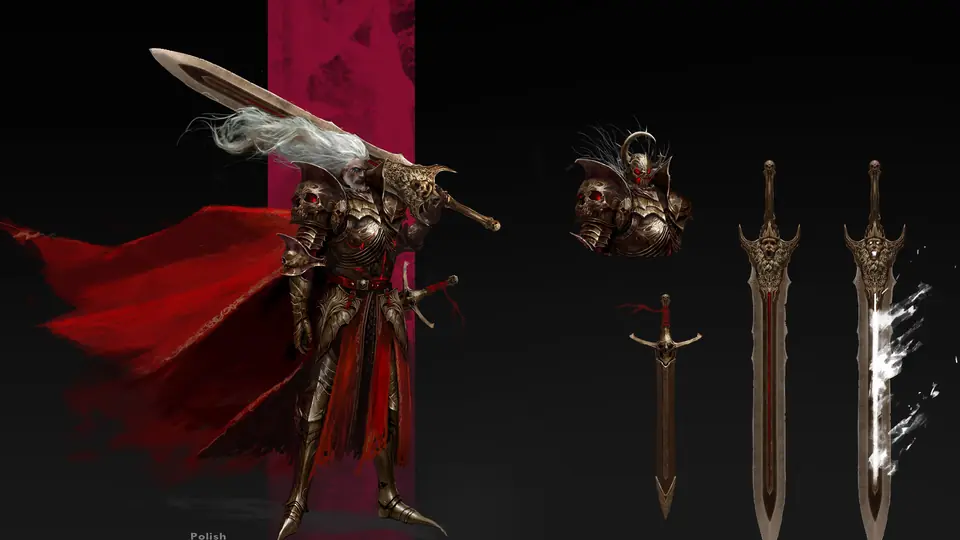
The nine pieces are four armor, two trinkets, a one-handed weapon, a shield and a two-handed weapon. Listed aloud that sounds like a choice between sword-and-board and a two-hander — but four plus two plus three is nine, and a hands-on preview confirms it directly: you carry two weapon sets and swap between them in combat.
That matters for planning, because it means a loadout is a combination of Weapon Arts rather than one. A nimble sword and shield paired with a sweeping two-hander gives you two Arts and two ranges to switch between when a fight changes shape.
Rarity is the other axis. Stronger gear improves your core stats and often arrives carrying its own Boon — and gear rarity also scales your Angel form, so a better loadout makes your transformation hit harder too.
Rarity is not the same as strength
The most common build mistake, named by the developers themselves.
Equipping your highest-rarity gear is not the same as building well. The strongest builds come from combining gear, Weapon Arts and Boons that complement one another — a helm that amplifies fire damage, a sword whose Art is a fire burst, and a ring that knocks down burning enemies are three items that multiply each other. Three unrelated legendaries do not.
The two obvious directions are overwhelming damage — gear that rewards aggression, Boons that restore health as you fight, and an Art that keeps the pressure on — or survivability, stacking defensive Boons and armor to outlast an encounter. Neither is correct; they are just two coherent answers.
Some equipment belongs to larger armor sets that reward collecting matching pieces, which is a third direction once your collection is deep enough to complete one.
Half your build happens during the hunt
Nexus Gates are where a loadout becomes a build.
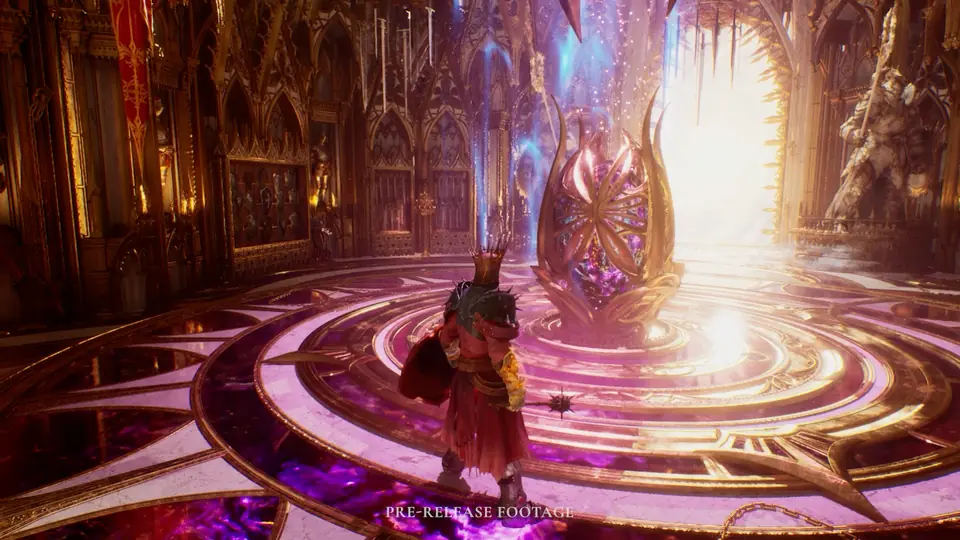
Fighting through a ward, you reach Nexus Gates. Each offers a choice of powerful temporary Boons — three randomised options — that last for the rest of the run. Every Gate is the same decision asked again: strengthen the build you have started, or adapt to what has actually dropped?
Because there are several Gates in a hunt, two runs from an identical loadout end up different by the time you reach the boss. That is the roguelite half of the game doing its work, and it is why trinkets matter more than their stats suggest: a trinket grants a specific Boon outright, which is the only way to guarantee one instead of hoping a Gate offers it.
The Boon pool itself grows. Recovering Lore Scrolls and returning them to Mara at the hub unlocks additional Boons that can then appear in future runs.
The Angel completes it
Chosen before the hunt, spent during it.
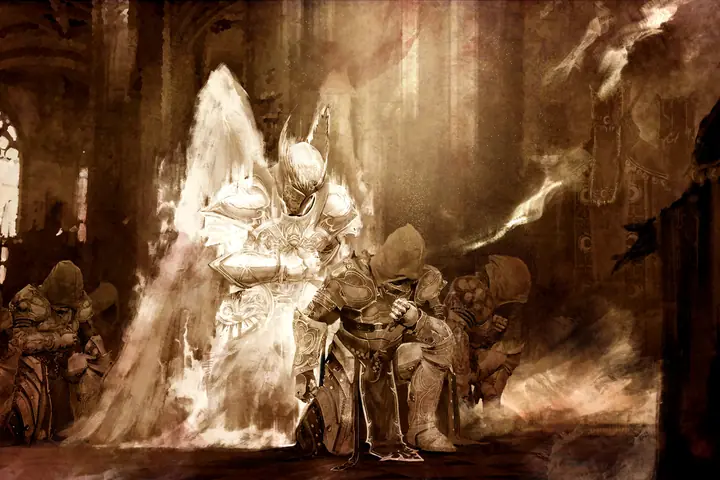
Every Nephilim picks an Angel Form at the Loadout Station before beginning a hunt — Aegis for direct melee force, Sunder for ranged Arcane damage and mobility. Combined with your gear, Arts and Boons it is the fourth piece of the build, and because it scales with your equipment rarity it gets better as the rest of your loadout does. Several Boons key off it directly, which is what turns “press it when it is full” into an actual plan.
What survives the hunt
The permanent half of the loop.
When a hunt ends you Purify the equipment you found, which adds it permanently to your collection. Every successful hunt widens the arsenal you can start the next one from — more weapons, armor, trinkets and Arts to combine. Temporary Boons do not survive; that is the distinction worth holding on to, and how runs work covers the rest of what carries over.
Common questions about builds
How many gear slots does a Crimson Moon build have?
Nine. Four armor pieces, two trinkets, a one-handed weapon, a shield and a two-handed weapon. You carry both weapon sets into a hunt and swap between them in combat rather than choosing one.
Are there character classes in Crimson Moon?
No. The developers are explicit that there are no traditional character classes — every Nephilim is defined by the build they create, so you are never locked into one playstyle and every hunt is a chance to try a different combination.
What is the difference between an innate and a temporary Boon?
An innate Boon is a permanent part of a piece of equipment and comes with it. A temporary Boon is picked up during a run at a Nexus Gate and lasts only for that run. Stronger gear often arrives with an innate Boon that changes how you fight.
How do you unlock more Boons in Crimson Moon?
By recovering Lore Scrolls and returning them to Mara at the hub. That adds new Boons to the pool that can then be offered to you during future runs, which is why scrolls are worth collecting rather than ignoring.
Do armor sets have bonuses?
Yes. Some equipment belongs to larger armor sets that reward collecting matching gear and let you specialise a build further. The exact bonuses and the thresholds they trigger at are not yet documented.