Crimson Moon beginner's guide
What kind of game this is, what it quietly leaves out, and the eight things worth knowing before your first hunt.

Crimson Moon is a roguelite with Souls-like combat, not a Souls campaign. You run the fallen city of Gildenarch in missions of roughly 15 to 45 minutes, get permanently stronger between attempts, and there is no corpse run — each run gives you a pool of lives, and when it empties the run is over and you do not go back for what you lost. Almost every preview called it a co-op Souls-like and stopped there; the developers call it a roguelite, and that is the half that decides how you should play it.
- Genre
- Roguelite, Souls-like combat
- Mission length
- 15–45 minutes
- Corpse run
- None
- Co-op
- 2 players, shared lives
- Character classes
- None
- Dual wielding
- Not in, not planned
Eight things that change how you play
Not controls — expectations. Each of these catches someone arriving from a different genre.
| # | What | Why it matters |
|---|---|---|
| 1 | It is a roguelite, not a campaign | You run the same fallen city repeatedly and get permanently stronger between attempts. If you expected one long connected world, this is the thing to adjust first. |
| 2 | There is no corpse run | A run gives you a pool of lives. When it empties the run ends and you do not go back for what you dropped — the single most famous Souls mechanic is simply absent. |
| 3 | Two currencies, two jobs | Souls are temporary and run-focused. Gold is permanent and upgrades your collection. Spending Gold like Souls is the common early mistake. |
| 4 | You carry two weapon sets | A one-handed weapon with a shield and a two-handed weapon, swapped mid-combat. Weapon Arts come from whichever you are holding, so a loadout is a combination of Arts. |
| 5 | Weapon Arts cost mana | They are on a cooldown and they consume mana, so a mana flask is part of your damage, not just your safety net. |
| 6 | Stamina is deliberately generous | The developers say they are more forgiving than most Souls games on purpose — they want you chaining attacks rather than waiting. Dodging, jumping and blocking still cost. |
| 7 | Difficulty is the progression | Gear rarity is capped per difficulty tier. Legendary equipment means climbing tiers, so difficulty is not a comfort setting — it is the endgame. |
| 8 | Levels are handcrafted, contents are not | The spaces are designed rather than generated. What changes between runs is the loot, the objectives and the enemies inside them. |
What a run actually looks like
Hub, ward, boss, home. The loop is short and it repeats.
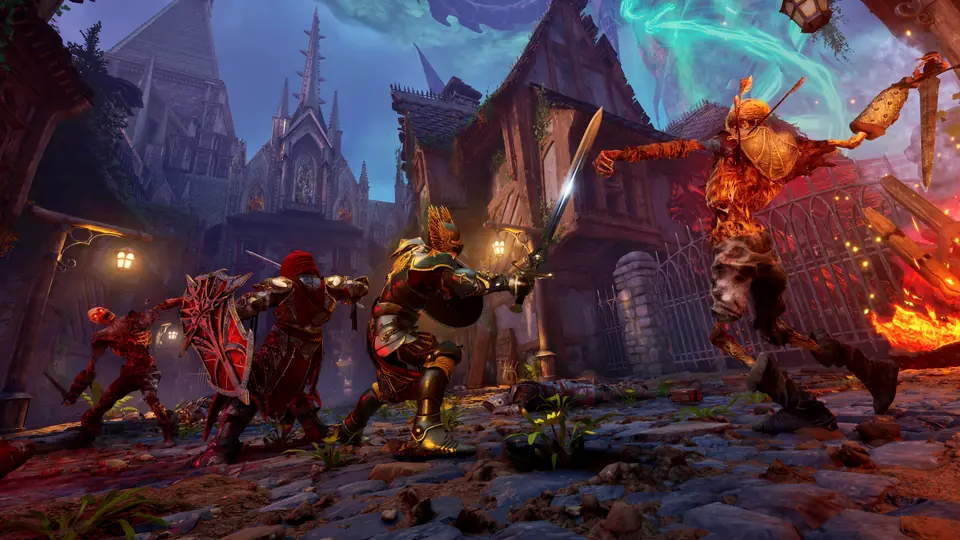
You start at Sanctus Clypeus, the stronghold of the Knights of the Crimson Moon, and choose where to go at the War Table. A ward is a chain of missions rather than one long level, with regular enemies, elite encounters, hidden secrets and a much larger boss at the end.
Loot drops constantly — from chests, from elites and bosses, and from secret areas. Picking it up is only half the system: Purifying it back at the hub is what adds it permanently to your collection, where it becomes available in your loadout at the start of any future run. That is why a run that ends badly is not a wasted run.
The full structure — three missions, a World Boss, and what Abraxas Stones change about the ending — is in how runs work.
How the combat reads
Souls-like in its parts, faster in its pacing.
Light and heavy attack chains, charge attacks, sprint and dodge-roll attacks, active blocking and timing-based parries. Stamina exists and matters, but the developers say they are deliberately more generous than most Souls games — you are meant to chain attacks rather than stand and wait.
Weapon Arts are where it opens up. Each weapon carries its own special ability — a thrown weapon you recall, a whirlwind, homing projectiles — on a cooldown, and using one costs mana. That is the rhythm of a fight: basic melee chains with Arts woven in, and a mana flask that is part of your damage rather than just a safety net.
Break an elite’s guard and finish it. A broken guard opens an execution — your Nephilim tears the enemy’s own weapon out of its hands and kills it with that. It is worth watching for; it is also free damage.
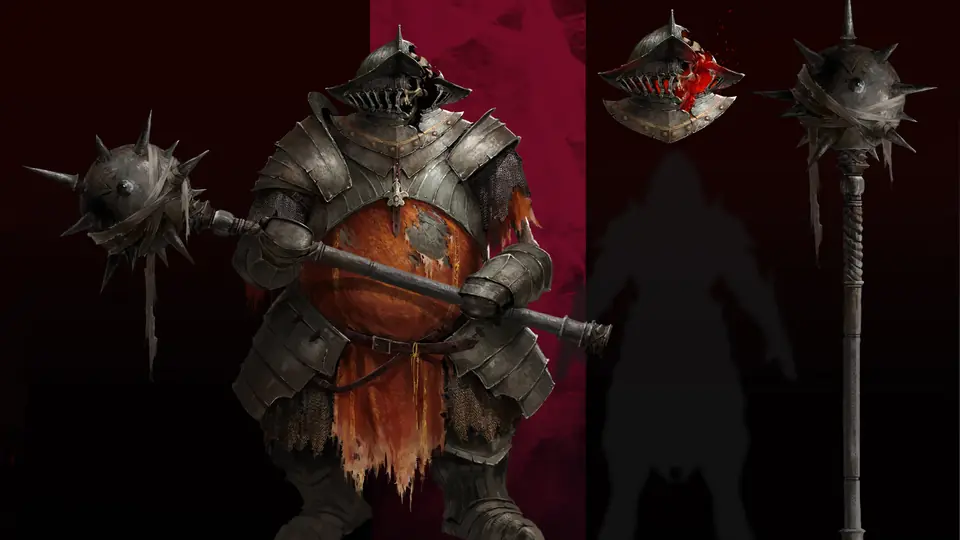
Enemies are separated by district rather than mixed everywhere: one ward is vampires, another Hellgrowth abominations, another armoured infernal demons. Most have only one or two signature moves, so the first few runs in a new ward are about learning telegraphs, after which you can dodge or counter almost everything.
When to spend your Angel
A power spike you choose the moment for — and the one point our sources disagree on.
Killing things fills a divine charge meter. When it is full you can trigger Angel Ascension on demand: temporary superior strength, boosted stats, fast health regeneration and extended reach. Aegis is melee-focused; Sunder brings ranged options. You pick which one you are taking at the Loadout Station before a mission, so it is a build decision rather than just a meter.
Do not spend it on trash. Save it for a boss entering a lethal second phase, or a high-health elite you need to burst down, or the moment you are cornered.
Our sources disagree on one detail. A hands-on preview describes a brief window of invincibility during the transformation; a summary of the developers’ own Q&A quotes them saying you are “pretty sturdy” and take very minimal damage but can still die in Angel form, especially if you trigger it on low health and play recklessly. Treat it as very tough rather than untouchable — the developer’s answer is the one to plan around.
Who is at the hub, and what they do for you
Four people at Sanctus Clypeus actually change how you play.
| Who | What they do |
|---|---|
| Gallant | Founder of the order and your mentor. Hands out bounty quests. |
| Mara | The historian. Bring her ancient Lore Scrolls and she rewards you with Boons that can then appear during a run. |
| Lahi | Treasure hunter. Stocks trinkets, throwables and consumables. |
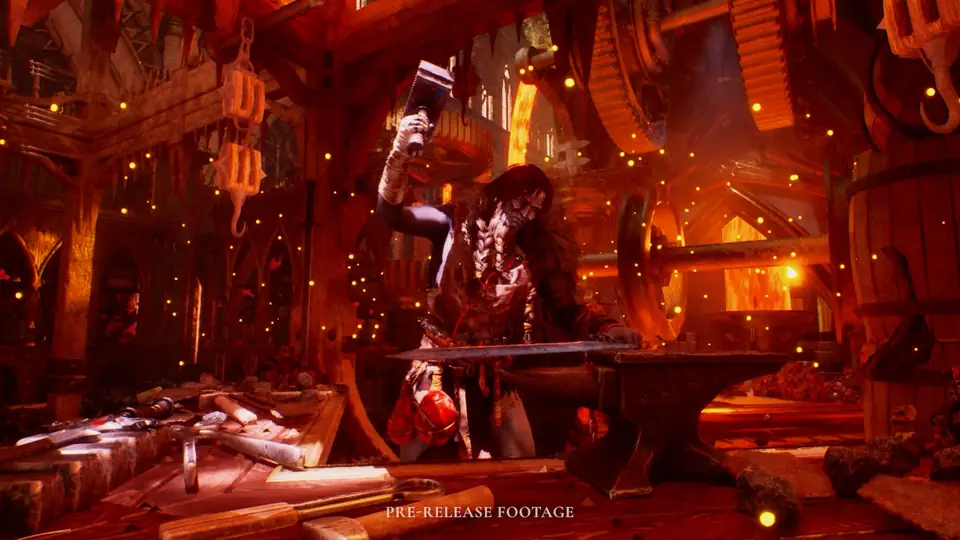
| Gajov | A vampire blacksmith who raises the rarity of your Purified gear. |
Lore Scrolls are worth picking up for that reason: returning them is what unlocks additional Boons into the pool that can then be offered during a run. They are not flavour text.
Playing co-op
Two players, and it does not make the game easier.
The whole game is playable solo or with one other person online. Bringing a partner scales the enemy count and the difficulty up to compensate, and you share a pool of lives — so a partner who dies repeatedly is spending your run as well as theirs.
There is no direct trading, but you can drop items on the ground for your partner to pick up, and chests can produce multiple drops so you are not fighting over one sword. Co-op is also where build crafting gets deeper: coordinated loadouts and complementary Boons are a real thing rather than a nicety.
Common beginner questions
Is Crimson Moon a Souls-like or a roguelite?
Both, and the roguelite half is the one that decides how you play. The combat is Souls-like — stamina, light and heavy attacks, dodging, blocking and parries — but the structure is run-based with permanent progression between attempts. The developers use the word roguelite themselves; most previews only said co-op Souls-like.
Is there a corpse run in Crimson Moon?
No. Crimson Moon has no corpse run. Each run gives you a pool of lives, and dying draws from that pool rather than ending the run immediately — but when the pool empties the run is over and you do not go back to reclaim what you lost. That run is simply finished.
What is the difference between Souls and Gold?
Souls are the temporary currency, spent inside and around a single run on consumables, temporary gear upgrades and extra Boons. Gold is the permanent one, used to upgrade the gear in your collection so future runs start stronger. If you are hoarding one, hoard Gold.
Do you lose your gear when a run ends badly?
Not the gear you brought home. Equipment you return to Sanctus Clypeus is Purified and added permanently to your collection, so a run that ends badly can still leave you richer. What you lose is the run-only progress: temporary Boons and anything not carried back.
Can you dual wield in Crimson Moon?
No, and it is not planned. Weapons are one-handed or two-handed, and a loadout carries both a one-handed weapon with a shield and a two-handed weapon, swapped during combat.
How many players is Crimson Moon co-op?
Two. The whole game is playable solo or with one other person online. Bringing a partner does not make it easier — the enemy count and difficulty scale up to compensate — and you share a life pool.